What to Wear and What to Pack for AlUla: a Practical Guide by Season and Activity
The right AlUla bag is built on two questions, not one: when are you travelling, and what will you be doing there? In a single day the destination brings together true opposites — desert sun through the afternoon and a tangible chill after sunset, walking on sand and stone in the morning and an elegant dinner at night. Pack for one climate and one activity and the gap shows on the first evening; pack by layers and by activity and a light bag covers the whole trip.
An editorial guide by the CHAPTERS TOUR team — AlUla
This guide is entirely practical: the dress principles for AlUla first, then the season table, then packing by the kind of day — adventure, family or a refined evening — and a final checklist that closes with what you do not need to bring at all. No product names and no brands; rules that apply to what you already own.
Before the detail, two truths govern everything that follows. First, desert nights are noticeably colder than the days in every season, so the evening layer is not a winter option but a standing rule. Second, AlUla's finest hours are lived standing or walking outdoors — before a carved facade or on open sand — so the comfort of your feet is the comfort of your trip.
The short answer
Dress modestly and comfortably, in layers: light fabrics for the day and a warm layer for the evening — a genuinely heavy one at the winter peak. Closed, comfortable, already-worn shoes that handle sand and stone; hat, sunglasses and sunscreen in every season; and a light multi-purpose scarf. Add one modest elegant piece for your evenings, and leave the heavy gear at home.
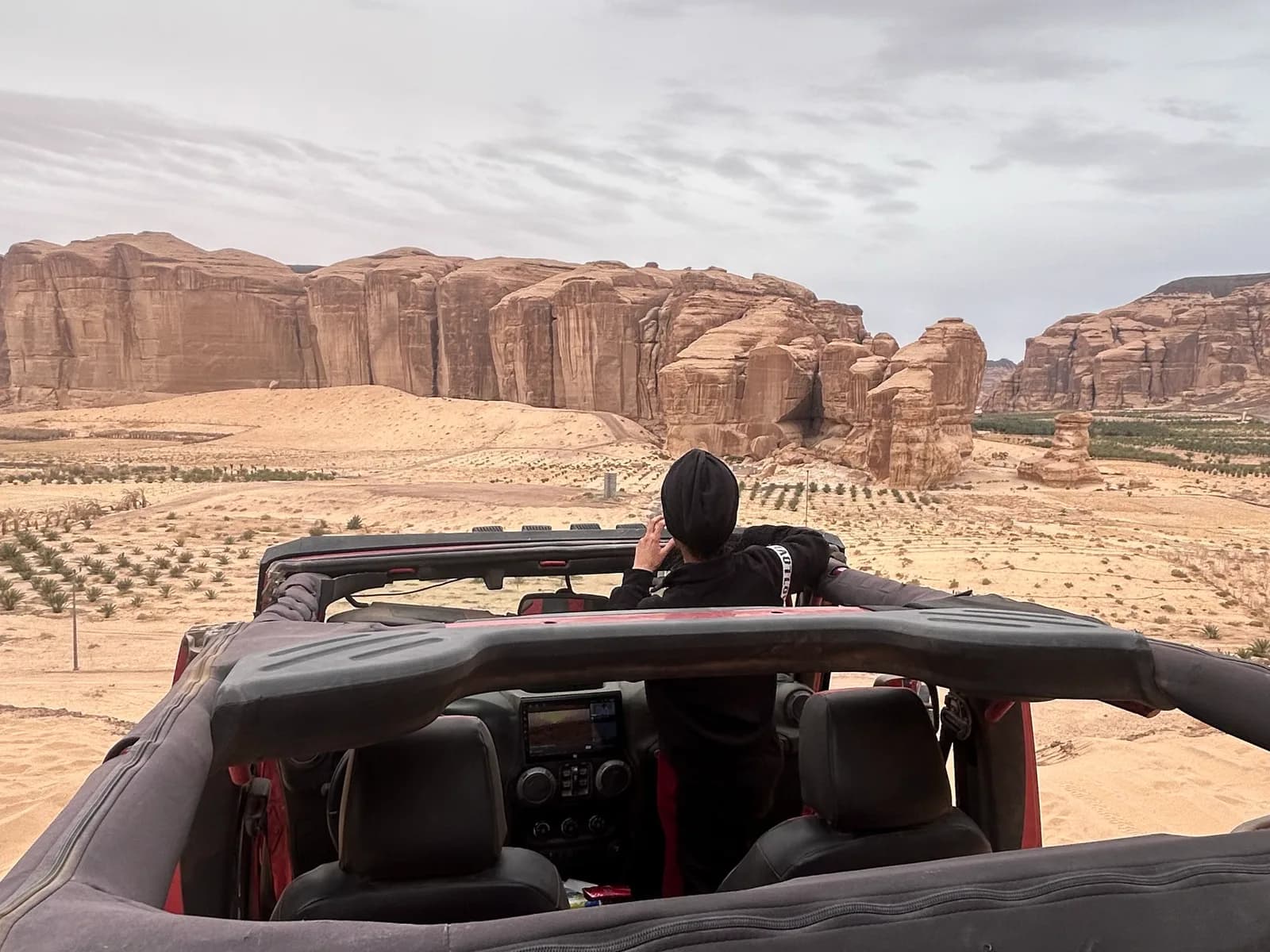
An open valley ride — a scarf and sunglasses cover its comfort
01
The dress rules for AlUla before any list
Before you open the suitcase, four rules compress this whole guide. Everything after them is elaboration:
■Modesty and comfort together: modest, comfortable clothing is the right fit in public places and at the sites — and an abaya is not required for foreign visitors.
■Layers, not heavy pieces: the gap between midday and evening temperatures is managed with layers that go on and off, not with one heavy coat that either clings to you or stays in the car.
■Feet first: closed, comfortable, already-worn shoes that handle sand and stone — the one item whose absence ruins the whole day with no substitute.
■The sun takes no holiday: hat, sunglasses and sunscreen in every season, even on pleasant winter days.
Notice that these rules do not compete with elegance; they define the range elegance moves within. Light colours, natural fabrics and relaxed cuts look better in photographs against the sandstone than any tight city outfit.
Some sites and experiences carry their own dress or photography guidance, explained at booking or on the ground — follow what is announced at the place itself.
02
Season by season: what changes in the bag?
The core of the bag stays the same all year; what changes is the weight and number of the layers. This table summarises the differences — the seasons themselves are detailed in our guide to the best time to visit AlUla:
Period
Days
Evenings
Do not forget
October – November
Mild — light fabrics with comfortable long sleeves
Cooling gradually — a mid-weight layer usually suffices
Sun protection stays essential despite the mild air
December – February
Pleasant — a long shirt with a light layer over it
Distinctly cold — a genuinely heavy layer for evenings
Camping and desert evenings need serious warmth, not a token one
March – May
Warming gradually — your lightest daytime pieces
Mild — a light evening layer
Early morning is best for activity, so lay things out the night before
June – September
Very hot at midday — the lightest, palest fabrics
The day's kindest hours — and when real activity happens
More water than you expect, with hat and sunscreen on every outing
The rule most first-time visitors get wrong is the winter-evening one: a sunny December afternoon suggests a spring wardrobe, then a distinctly cold desert evening arrives and the heavy layer left at home becomes the most wanted item of the entire trip.
The table is a general pattern, not a forecast — check the actual forecast in the days before you travel and adjust the weights against it.
03
Adventure days: sand, trails and open rides
Movement activities — from sand-driving programmes in the style of AlUla Sands Academy to open valley rides in the style of Dahaleez — have their own packing logic: everything with you must tolerate dust, wind and sun, and everything on you must never restrict your movement.
■Closed shoes with a firm sole — sand finds its way into sandals, and stone is unkind to exposed feet.
■A light scarf that can cover face and neck when needed — your first friend in open vehicles and dusty air.
■Sunglasses that sit firmly — the wind on an open ride lifts loose frames away.
■Clothes you are not precious about: dust is part of the fun, not an accident.
■A zipped pocket for phone and keys — what falls into sand while moving is hard to find again.
And carry as little as possible in hand: a small backpack that closes properly beats any open shoulder bag. Published experiences state on their pages what they provide and what you are expected to bring — read the experience description before you pack for it.
Family days: pack for energy, not for the occasion
The family day-bag in AlUla is run by a single rule: children's energy is the most expensive currency, and everything in the bag serves to protect it — shade, water, comfortable feet and something for the waiting moments.
■A hat for every child and sunscreen reapplied through the day — not once in the morning.
■More water than your estimate, and familiar snacks rather than new food experiments mid-trip.
■A warm layer for every child in the evening bag even if they resist it in the afternoon — they will ask for it after sunset.
■Tried, closed shoes for the whole family — a day that starts in brand-new shoes is a day children spend complaining.
■A simple change of clothes for the youngest: sand finds its way into everything, and that is among the best parts of their day.
And because pace matters more than contents on a family trip, different ages need different schedules, not just different bags — our guide to AlUla with children breaks that down stage by stage.
At the other end of a sand-filled day stand AlUla's evenings: a private sunset in the style of the private Elephant Rock Sunset experience, an evening in the style of the Light and Fire Night when it is published, or dinner under the stars at a fitted camp with its heritage majlis. These moments deserve one elegant piece — and the intelligence lies in choosing it, not in multiplying it.
The rule here: modest elegance over a practical base. A desert evening combines soft sand underfoot, a chill after sunset and sometimes low seating — so the ideal elegant piece is the one that withstands all three: fabric that drapes beautifully and is not ruined by sitting, a length that covers and moves comfortably, and an elegant closed shoe rather than a heel that sinks into the sand.
■One or two elegant evening pieces cover the whole trip — worn over the same layer base.
■Make the evening warmth part of the look rather than its opposite: a heavy shawl or an elegant coat instead of a sports jacket over a dress.
■Earthy and light tones glow in sunset photographs against the rock — harsh contrast tires them.
■A light fragrance and simple touches: the desert evening is enchanting on its own and needs no competition.
Published evening experiences change with the season — check the experiences page for what is available on your dates, and read each evening's description for what it includes.
06
The final packing checklist
This list gathers the whole guide onto one page. Set the layer weights to your season from the table above, then tick it through piece by piece:
■Closed, comfortable, already-worn shoes, and two more pairs of socks than you think you need.
■Light, modest daytime pieces with long sleeves — sleeves are sun protection before they are cover.
■A warm evening layer: light at the season's edges, genuinely heavy from December to February.
■Hat, sunglasses and sunscreen — in every season without exception.
■A light multi-purpose scarf: midday sun, open-ride dust, and extra warmth at night.
■A refillable water bottle and a small backpack for your field day.
■A power bank and a spare cable — shooting from sunrise to the stars drains any battery.
■Moisturiser and lip balm — desert air is dry in every season.
■One modest, elegant evening piece for a private evening or dinner.
■Your documents and site tickets saved on your phone with a copy reachable offline.
Coverage is good in the urban area and weakens on some mountain and desert routes — download the maps and tickets you need before leaving coverage.
07
What you do not need to bring or worry about
Half of excess luggage weight is worry, not clothing. These you can confidently leave at home:
■Camping gear for a night at a fitted camp: fitted tents — Chapters Camp among them — provide hotel bedding, air-conditioning, a private bathroom and hospitality; you only need your warm layer.
■Heavy mountain boots: for the usual visitor trails a sturdy closed trainer is enough — specialised gear belongs to whoever books a specialised activity that explicitly asks for it.
■A compulsory abaya for foreign visitors: not required — modest, comfortable dress as set out in the first section is enough.
■Large amounts of cash: cards are accepted at the main facilities, while a little cash remains useful at small sites and craft stalls.
And if your trip is organised, read each journey's or experience's description before packing for it: what the organisation provides — water, hospitality, equipment — is written on its page, and what remains is your personal bag alone. A complete two-day programme, with its rhythm and stops, is in our AlUla in 48 hours guide.
No — an abaya is not required for foreign visitors. What is expected is modest, comfortable dress in public places and at the sites: covering sleeves and lengths in comfortable fabrics. Some experiences may add their own guidance, explained at booking.
What are the best shoes for AlUla?
Closed, comfortable, already-worn shoes with a sole that handles sand and stone — a sturdy trainer covers most visitors. Sandals suit an urban evening rather than the sites, and a brand-new shoe is a gamble on a walking-heavy trip.
How warm a layer do I need for winter evenings?
Warmer than the sunny afternoon suggests: December and January nights are distinctly cold, and desert and camping evenings need a genuinely heavy layer — a warm coat or its equivalent — not a token light jacket.
What should I wear in the summer heat?
The lightest, palest fabrics, with loose long sleeves that protect from the sun better than exposed skin, plus hat, sunglasses, sunscreen and constant water. The day's schedule is part of the answer too: activity belongs to the early morning and the evening.
How do I protect my phone and camera from sand and dust?
A pocket or bag that zips shut while moving, a lens wipe before each shot rather than after every hundred, and no lens changes in dusty air or during open rides. The light scarf doubles as a quick cover when the wind picks up.
What should I add for a night at the camp?
Less than you expect: a fitted camp provides the bedding, private bathroom and hospitality. Add your warm layer for the open-air evening, warm socks, and your personal toiletries — the rest is on the place.
What if I forget something essential?
General essentials are available in AlUla's urban area, so forgetting is not a disaster. But the precise items — your tried comfortable shoes, prescription glasses, medicines you use — carry with you rather than counting on finding an exact match in a small destination.
Pack your bag, and leave the day's organisation to us
Send your dates and the kind of trip you want — adventure, family or quiet evenings — and receive a programme that states, day by day, what the organisation provides and what you need to bring, so you neither overpack nor miss a thing.