The Best Time to Visit AlUla: the Seasons as You Actually Live Them
The first question before any AlUla trip is not what to see but when to go. The destination changes with the seasons: a valley whose winter air opens the whole day to activity, and a summer whose midday heat moves life to early mornings and evenings. No single month is right for everyone. The best timing depends on what you want from the trip — long walks between archaeological sites, quiet evenings, an adventure in the sand, or photography that chases the light.
An editorial guide by the CHAPTERS TOUR team — AlUla
The general rule is simple. AlUla's mild season runs from October to March, peaking from December to February, when days are pleasant and nights are distinctly cold. From June to August the midday heat is intense; visiting remains possible, but field activities are scheduled for early morning or just before sunset. Between those two poles sit shoulder months with calculations of their own.
This article lays that rule out in a single table, then explains why winter earns its reputation, how to visit intelligently outside the peak, and how to choose your timing by trip type and by where you stay — without promising perfect weather or inventing temperature figures. Weather is live data you check before travelling; seasonal patterns are stable enough to build a decision on.
The short answer
October to March suits most visitors, with the peak from December to February: pleasant days and cold nights that need a warm layer. Summer works as a well-planned evening visit. Before booking, choose the kind of trip first — family, adventure, quiet, photography — then pick the month that serves it, not the other way round.
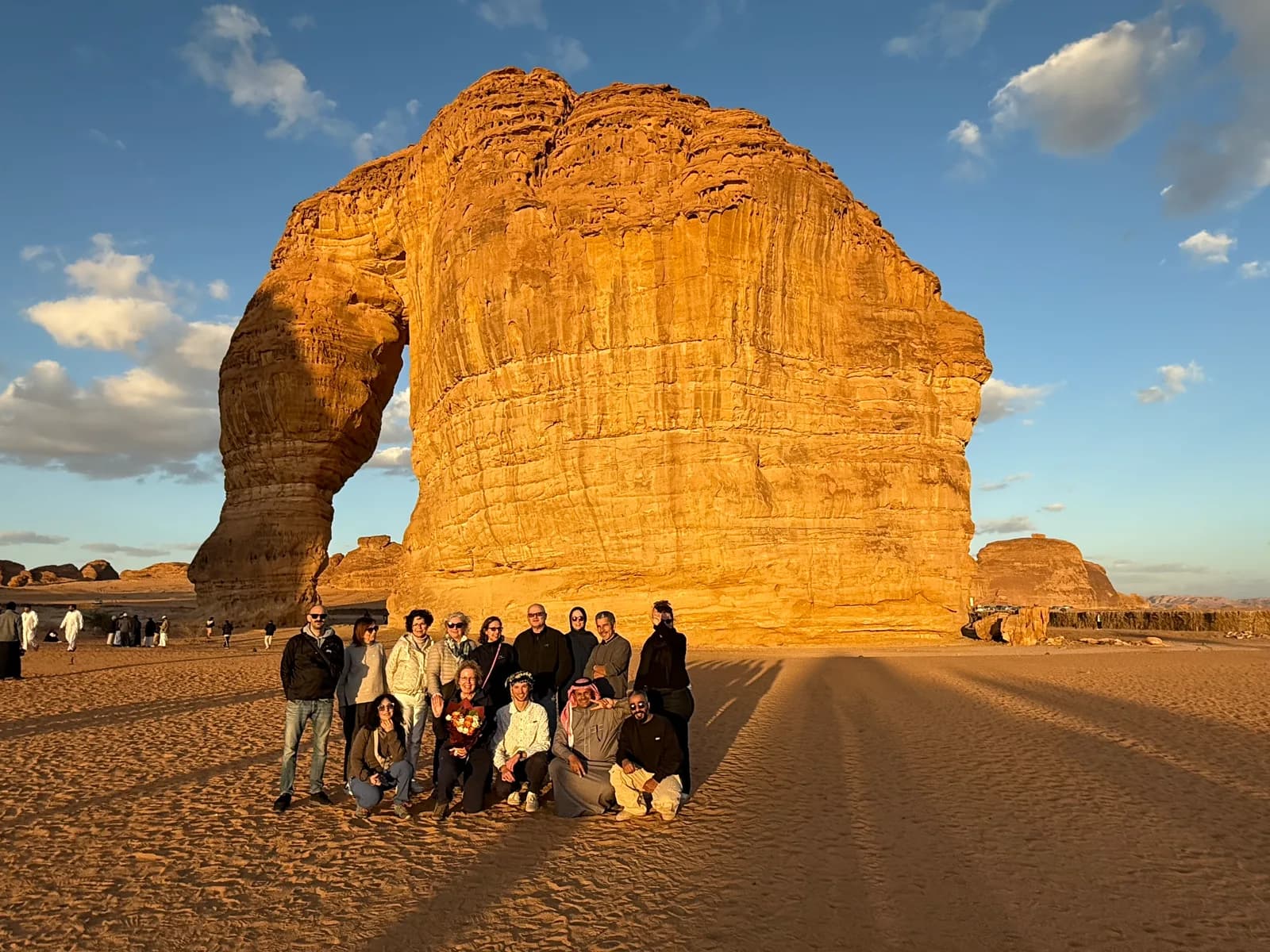
Golden hour at Elephant Rock — mild-season light
01
The short answer: the whole year in one table
Before the detail, here is the map of the year as a visitor lives it on the ground. The table describes the general pattern of each period, not a forecast for a particular day; years vary, and a good decision is built on the pattern and then adjusted against the actual forecast shortly before travel.
Period
Days
Nights and evenings
Best suited to
October – November
Mild and suitable for every activity as the season opens
Pleasant, cooling gradually
Visitors who want season conditions before demand fully builds
December – February
Pleasant and ideal for walking and the archaeological sites
Distinctly cold — a warm layer is essential for evenings and camping
Peak season: the full atmosphere and events, with higher demand
March
The tail of the mild season, comfortable conditions
Mildly cool
Walking, photography and an unhurried visit with less crowding than the peak
April – May
Heat building gradually — mornings work best
Acceptable early in the period, warming as it advances
Early-morning programmes with flexible evenings
June – September
Very hot in the middle of the day
The calmest hours — when real activity happens
A planned evening visit: sunsets, stars and short experiences
Notice that the most important column is not the weather itself but the final one. The practical question is never simply whether the weather is good; it is whether the weather suits what you intend to do — which is what the rest of this article unpacks.
Desert nights are noticeably colder than the days throughout the season — the extra evening layer is essential even after a fully sunny afternoon.
02
Why is winter AlUla's peak season?
Winter's reputation in AlUla is not seasonal marketing. It is the result of three factors that rarely align in one destination: weather that opens the entire day to activity, low winter light that flatters the sandstone, and an events calendar that reaches its height in these months.
The whole day becomes usable
In the peak months you do not need to outmanoeuvre the heat. The major archaeological sites — Hegra, the first Saudi site on the UNESCO World Heritage List, among them — the Old Town and the valley are all comfortable at any hour of the day. That means a fuller programme without exhaustion, longer walks between stops, and a schedule built around what you actually want to see rather than around hiding from the sun.
The cold night is part of the experience, not a flaw in it
December and January nights are distinctly cold, and that cold is precisely what makes winter desert evenings special: a gathering around the fire, dinner in the open air, and a clear sky for the stars. The task is not to avoid the night but to prepare for it — a warm layer carried at all times, with fuller detail in our guide to what to wear and pack for AlUla.
Higher demand has its price: book early
The other face of the peak is demand. Group departure seats, experience slots and places to stay are booked faster than in the rest of the year, and market prices generally firm up as demand rises. That is no reason to abandon winter — it is a reason to plan it early and not to leave the essential elements, the archaeological sites journey above all, to the last moment.
Actual availability shifts week by week in the peak — the reference is always the live journey and experience pages at the time you book, never an article.
03
Summer and the shoulder months: visiting intelligently outside the peak
Outside the mild season AlUla does not drop off the map; the way you use it changes. The difference between an exhausting summer visit and an enjoyable one is a difference of scheduling, not of luck.
Summer: turn the day upside down
From June to August the middle of the day is very hot, so the day is built on its two ends: a short field activity in the early morning, a long rest through midday inside your accommodation, then the real outing just before sunset and beyond. Summer evenings in AlUla are genuinely alive — sunset light on the rock, air that softens after dusk, and an open sky.
This is where short evening experiences become the backbone of the visit rather than an add-on — from private sunset sessions at Elephant Rock to evenings in the style of the Light and Fire Night when they appear on the published calendar. Check the experiences page for what is actually available on your dates.
The shoulder months: good value for the flexible
October, November and March give you most of the season's advantages with less crowding than its peak, while April and May suit early-morning programmes with flexible evenings. If your schedule allows a choice, these windows are often the best balance of conditions, calm and booking ease.
In the hot months carry more water than you think you need, with a hat and sunscreen on every outing — even a short one.
04
Choose your timing by trip type, not the other way round
The timing decisions that fail most often start from the inverted question — asking when the weather is best instead of asking what the trip is for. Four common profiles show the difference.
A family trip: the mild season first, and pace before month
Families benefit from the mild season more than anyone, because children's and older relatives' energy is the first thing heat consumes. From October to March you can build a full family day at a calm pace: one site in the morning, rest at midday, and the Old Town or a short experience in the evening. For detail by children's ages, see our guide to AlUla with children.
An adventure trip: look to the mild ends of the day
Sand and trail activities — from driving programmes in the style of AlUla Sands Academy to open-valley rides in the style of Dahaleez — are at their best when the air is mild and the light is low: mild-season mornings and late afternoons. In summer their comfortable windows shrink to early morning and the hour before sunset, leaving little scheduling margin.
A quiet trip or private occasion: the calmer edges of the season
If the heart of your trip is privacy and stillness — a couple's occasion, or a short retreat in the style of Malath when it is published — consider the season's edges: October, November and March offer much the same conditions with less crowding, and make the slots and places you want easier to secure. To weigh a private format against a group one, see our comparison guide.
A photography trip: the light is guaranteed; the season sets the comfort
Sunrise and sunset light is beautiful on the sandstone all year round, so a photographer never loses the light in any month — only the comfort. Winter gives longer working hours without exhaustion and clearer night skies in its cold evenings; summer compresses everything into the dawn and dusk windows. Plan your locations around the light first, then choose the month that makes the waiting between frames bearable.
The rhythm of a single day matters more than the date
Whatever month you choose, AlUla has a fixed daily rhythm whose effect outweighs the date itself: light and heat move together across the day, and whoever schedules with them wins in every season.
■Early morning: the best time for archaeological sites and long walks — softer air, beautiful side light and fewer people.
■Midday: the hour for rest or shaded and indoor activity — non-negotiable in summer, a choice in winter.
■Late afternoon and sunset: the visual high point — the rock changes colour, shadows stretch, and places such as Elephant Rock are at their finest.
■Night: evenings, stars and gatherings — with a warm layer through the whole mild season, not only in deep winter.
This rhythm is behind a piece of advice that recurs across all our guides: do not overfill the day with stops. Distances between sites consume real time, and AlUla's finest moments — the shifting light on the rock above all — require you to be standing in the right place when they happen, not driving towards it.
If your trip has one appointment that cannot be missed — a sunset at a particular site, say — make it the anchor of the day and build everything else around it.
06
What does timing mean for where you stay?
Timing does not only shape your programme; it also changes which kinds of accommodation give you their best value. The six Stays by CHAPTERS places range from a hotel in the heart of the services district to farms and a camp in the landscape, and each has a season in which it shines.
In the mild season: the landscape wins
When the air is pleasant, a stay that opens onto the outdoors becomes the experience itself rather than a place to sleep: Chapters Camp evenings between the palms and the mountain, with its heritage majlis and gatherings around the fire; the terraces of the glass Palm Houses facing the mountains; Aura Farm's garden and its rise overlooking Hijr; and the walkways of Orange Farm between the trees. All of these are lived outside — and in the mild season, outside is generous.
In the hot months: proximity and indoor comfort
In summer a visitor spends the midday hours inside, which tips the balance towards comfortable units close to everything — CHAPTERS Hotel in Al-Aziziyah, ten minutes from the Old Town, is the practical choice here with its suites and lounges — while the farms and the camp remain a beautiful option for those who plan their evenings well and rest through the day.
Our stays are requested with your dates and availability is confirmed by message before any commitment — each place's page sets out its units and its distance from the Old Town.
07
How do you settle the timing and turn it into a plan?
If you have reached this point still undecided, here is a way to settle it in three steps that take only minutes:
■Define the kind of trip first: family, adventure, quiet, photography — or a mix with a clear order of priority.
■Match it against the table at the top of this article: choose the period that serves the type, then check how flexible your dates are within it.
■Fix the scarcest element early: in the peak, book the archaeological sites journey and your stay before anything else; in summer, confirm the main evening experience first.
Then turn the decision into an actual programme: browse the published journeys and experiences with their live dates, or send your dates and interests and have a programme built to the measure of your season. And if your visit is short, our forty-eight-hour AlUla guide arranges two complete days for you.
The mild season from October to March suits most visitors, with the peak from December to February: pleasant days for every activity and cold nights that need a warm layer. The season's edges — October, November and March — offer a good balance of conditions and calm.
Are winter nights in AlUla really cold?
Yes. Desert nights are noticeably colder than the days, and the evening chill is strongest in December and January. A warm layer for evenings is essential even after a sunny, warm afternoon — it is the first thing forgotten and the most regretted.
Is a summer visit to AlUla worth it?
It is, provided it is built on the right rhythm: a short early-morning activity, a midday rest, then the real outing just before sunset and after. Evening experiences become the core of the visit, and midday is spent inside your accommodation.
When is demand at its highest?
In the peak season from December to February, with extra intensity around holidays and seasonal events. Visiting at the peak buys the full atmosphere, and the price is booking early and sharing the sites and slots with more people.
What is the best timing for a family trip?
The mild season from October to March, because children's and older relatives' energy is the first casualty of heat. Build the day at a calm pace: one focus in the morning, rest at midday, and a short experience or the Old Town in the evening.
And when are adventure activities at their best?
On mild-season mornings and late afternoons, when comfortable air and beautiful low light coincide. In summer the comfortable windows narrow to early morning and the hour before sunset, which shrinks the scheduling margin and magnifies any delay.
When is the light best for photography in AlUla?
Sunrise and sunset are beautiful on the sandstone all year, so the light does not belong to any single month. The seasonal difference is comfort: winter allows longer working sessions and clearer night skies, while summer compresses shooting into the dawn and dusk windows.
How early should I book for a peak-season visit?
There is no single correct figure. The practical rule: the closer your dates sit to December–February, the sooner you should fix the essential elements — the archaeological sites journey and your stay — as soon as your dates are clear, because peak slots are taken faster than at any other time of year.
Choose your season, and let the programme be built on it
Send your likely dates and the kind of trip you want — family, adventure or quiet — and receive a programme that respects the rhythm of the season you chose: what to book early, what to leave flexible, and when each activity is at its finest.